

Wall texts – things that go wrong and what we can do
Workshop review
Wall texts are all around us, displaying warnings and information in places such as museums, underground systems and public facilities. As linguists, we instinctively analyse them and secretly judge any clumsy translations. And one of the questions I was curious to cover in this online workshop by Mary Ellen Kerans* is whether poor translations really matter.
Mary Ellen’s answer was a resounding yes: wall texts are communicative – they shape how reliable and legitimate we perceive an organization to be and whether we trust its products or services.
This set the tone for some lively discussion. After a brief introduction, we were whisked off into a series of fast-paced breakout sessions to debate real-world examples. In small groups, we discussed short text examples paired with images from the Spanish metro system, asking whether they were fit for purpose – and, crucially, why or why not.
Once we’d found our groove, the conversation shifted from identifying flawed texts to taking action. Spotting a problem is one thing; doing something about it is another. How do we use our skills not just to flag errors, but to analyse their root causes – then convey those findings in a way that convinces clients of the impact on their customers’ experience?
Mary Ellen offered practical guidance for communicating these issues persuasively, with a win-win perspective. Poor translations present an opportunity for us to demonstrate our expertise and secure new business, while also enabling clients to protect their brand and reputation.
In the second half of the workshop, we applied these insights to “meatier” museum, art and tourism texts in longer breakout sessions. Mary Ellen invited us to develop our grammatical and linguistic analysis and think about how we could articulate our findings to clients. The discussions were lively and thought-provoking, yielding takeaways we can apply directly to our work and our prospecting strategies.
I particularly appreciated the fact that Mary Ellen addressed the real-world constraints that impede relationships between clients and language professionals. And while the specific examples of socioeconomic challenges centred on Spanish public procurement, Mary Ellen’s suggestions on teaming up to navigate tenders and adopting a clear strategy for articulating our value apply to translators in all countries.
The conversation also touched on the implications of AI. More than ever, language professionals need to engage clients proactively, seizing every opportunity to demonstrate our communication expertise and local knowledge – and to convince organizations that produce wall texts that human translators continue to be a wise investment.
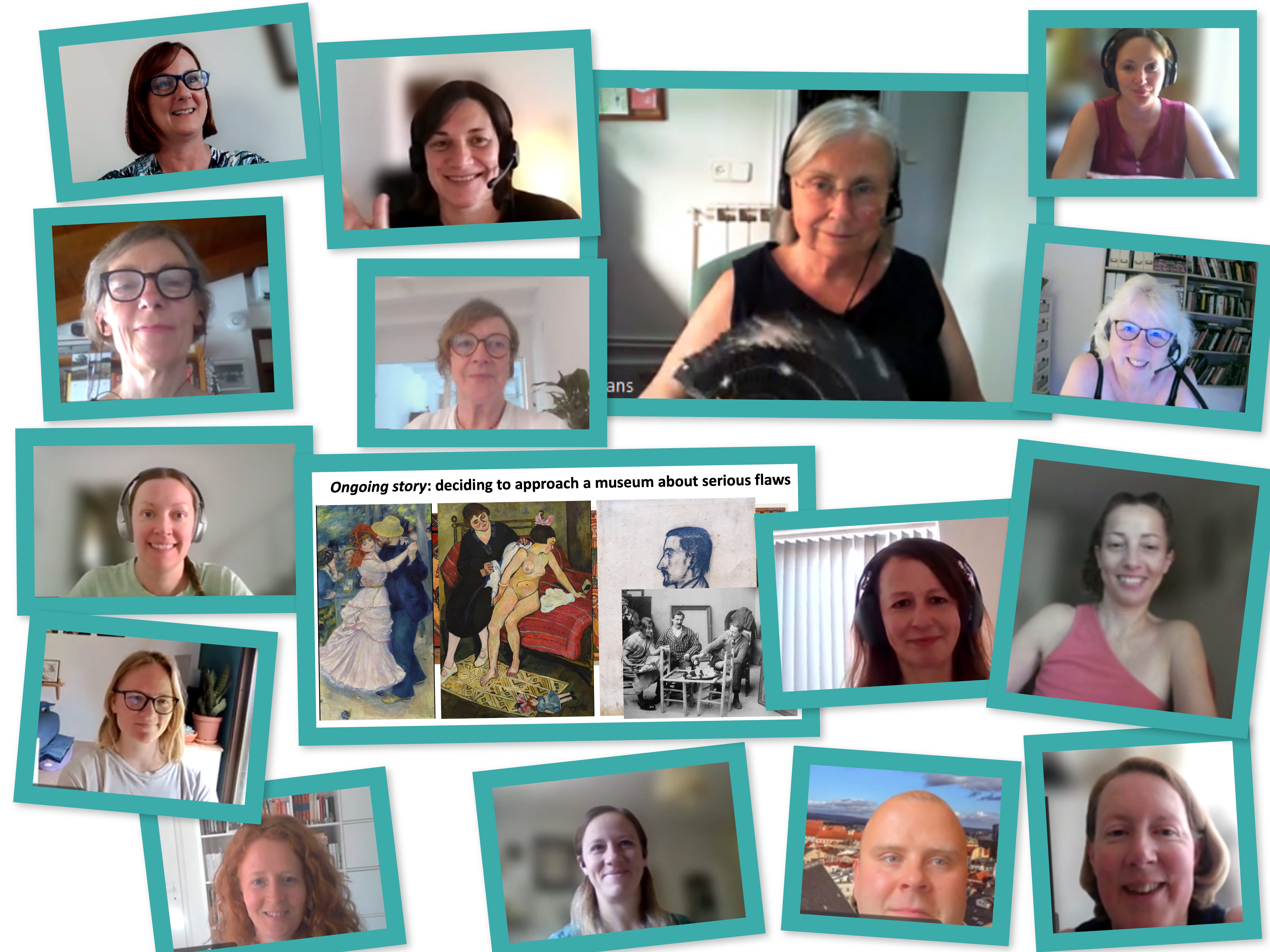
Review by Louise Normandière, collage by Ruth Simpson
*Sign‑in required to view this MET member profile.


Follow us: