

MET workshop day in Lyon, 24 April 2026
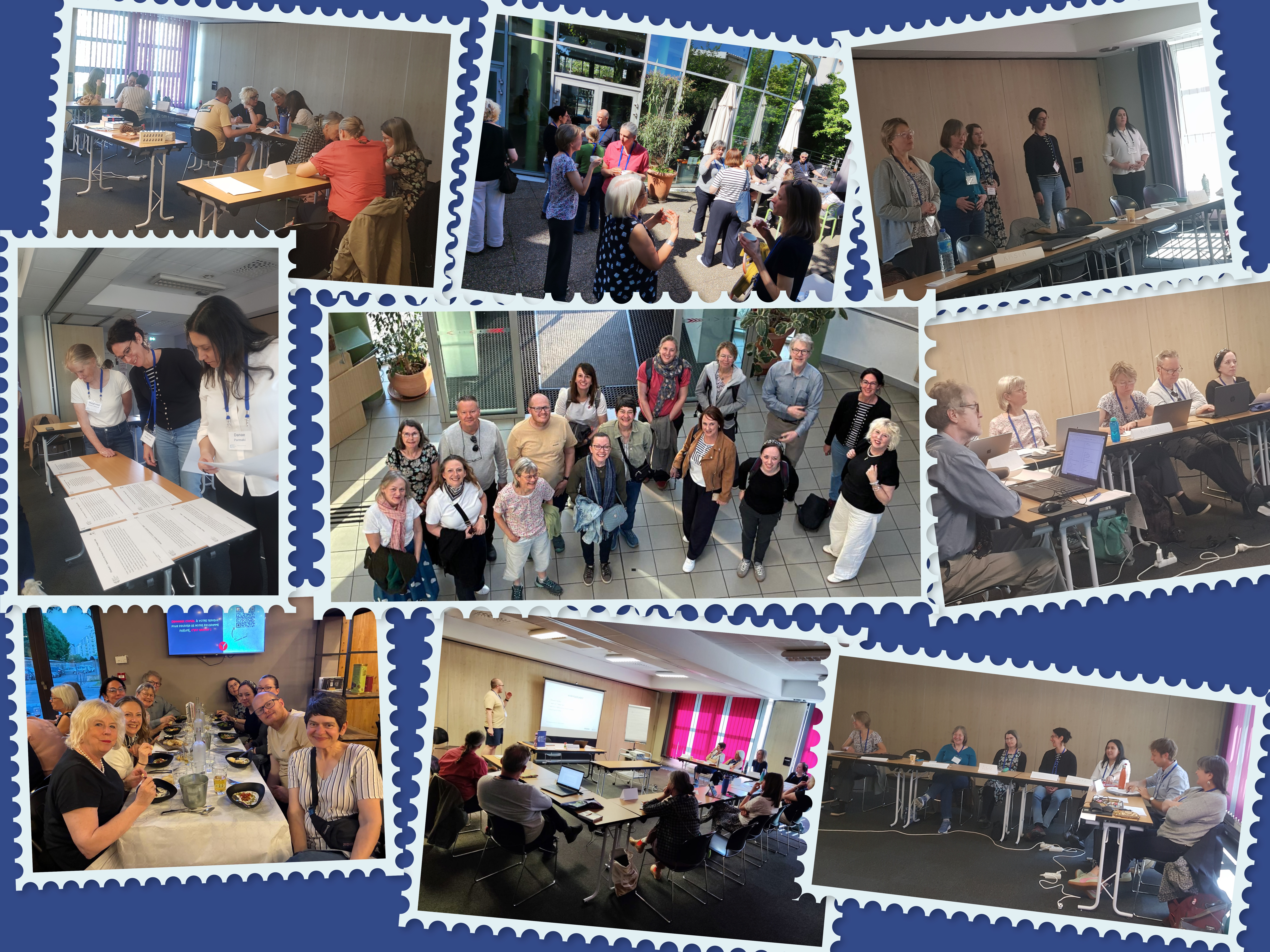
This year the MET workshop day was held in France, where the Centre international de séjour de Lyon provided a seamless one-stop venue for our four peer-to-peer workshops. On the agenda: building a specialization in architecture, communicating with confidence, writing creatively and harnessing the potential of LLMs.
The day kicked off with two parallel morning sessions, on translating for architecture and working with LLMs.
Terri White, who is based in France and also works from German, gave us an introduction to specializing in architectural translation. She began with a detailed breakdown of translation needs in the architecture and construction industry. Her key messages were that there is plenty of overlap with other fields – from legal and technical to art history and design – and that human translation is still valued among premium clients. Terri then emphasized the importance of learning how to see and think like an architect, using the library of books and props she had brought with her to reinforce her point. After directing participants towards other resources for acquiring knowledge and networking within the industry, she highlighted some of the pitfalls in architecture translation, including the risks of over-reliance on words not accompanied by images and of accidentally overlooking nuances in specific terms. In the practical section, participants worked in small groups on translations that featured tricky problems such as noun-heavy French phrases and the constant need to decide whether “ville” should be rendered as “town” or “city” in English.
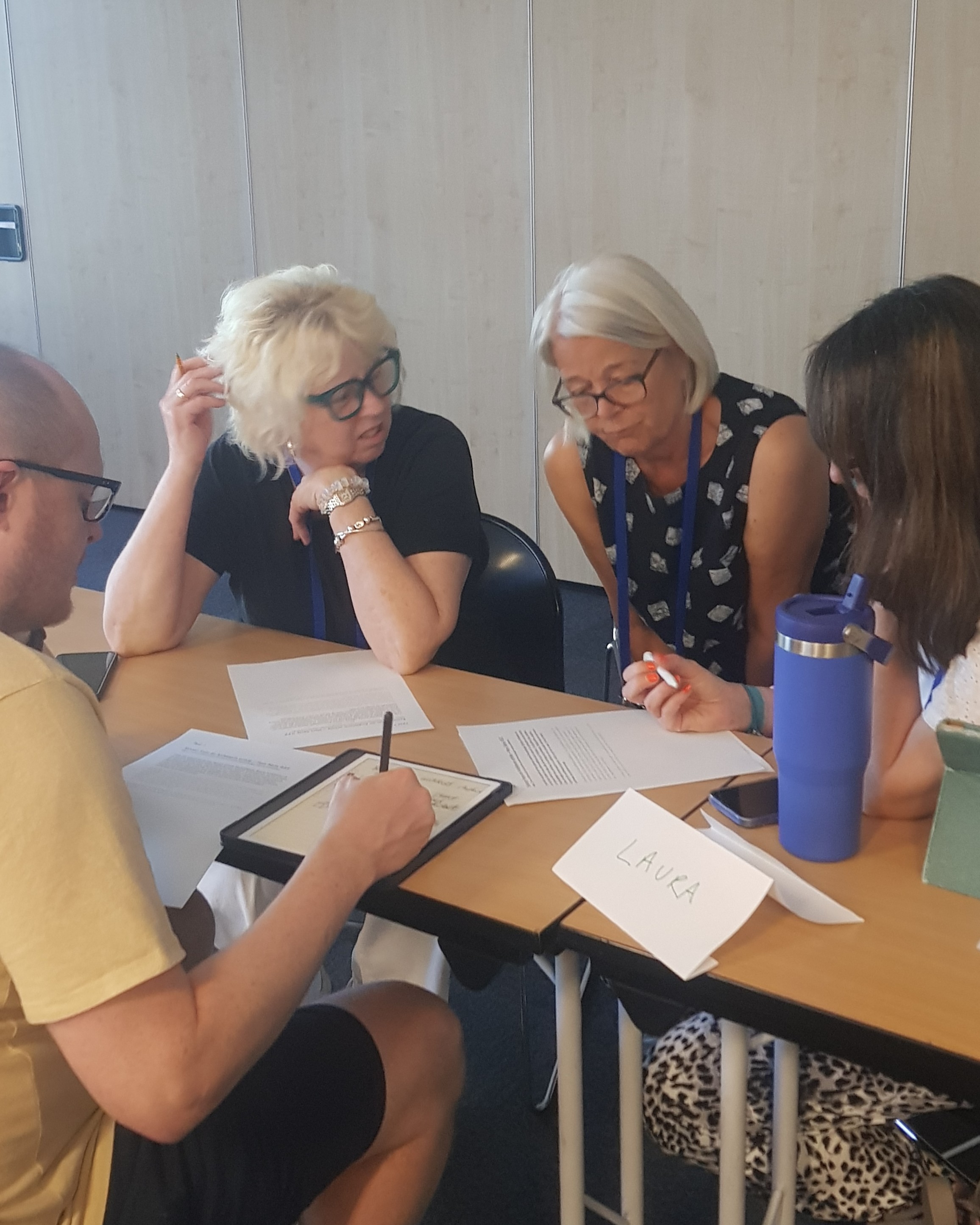
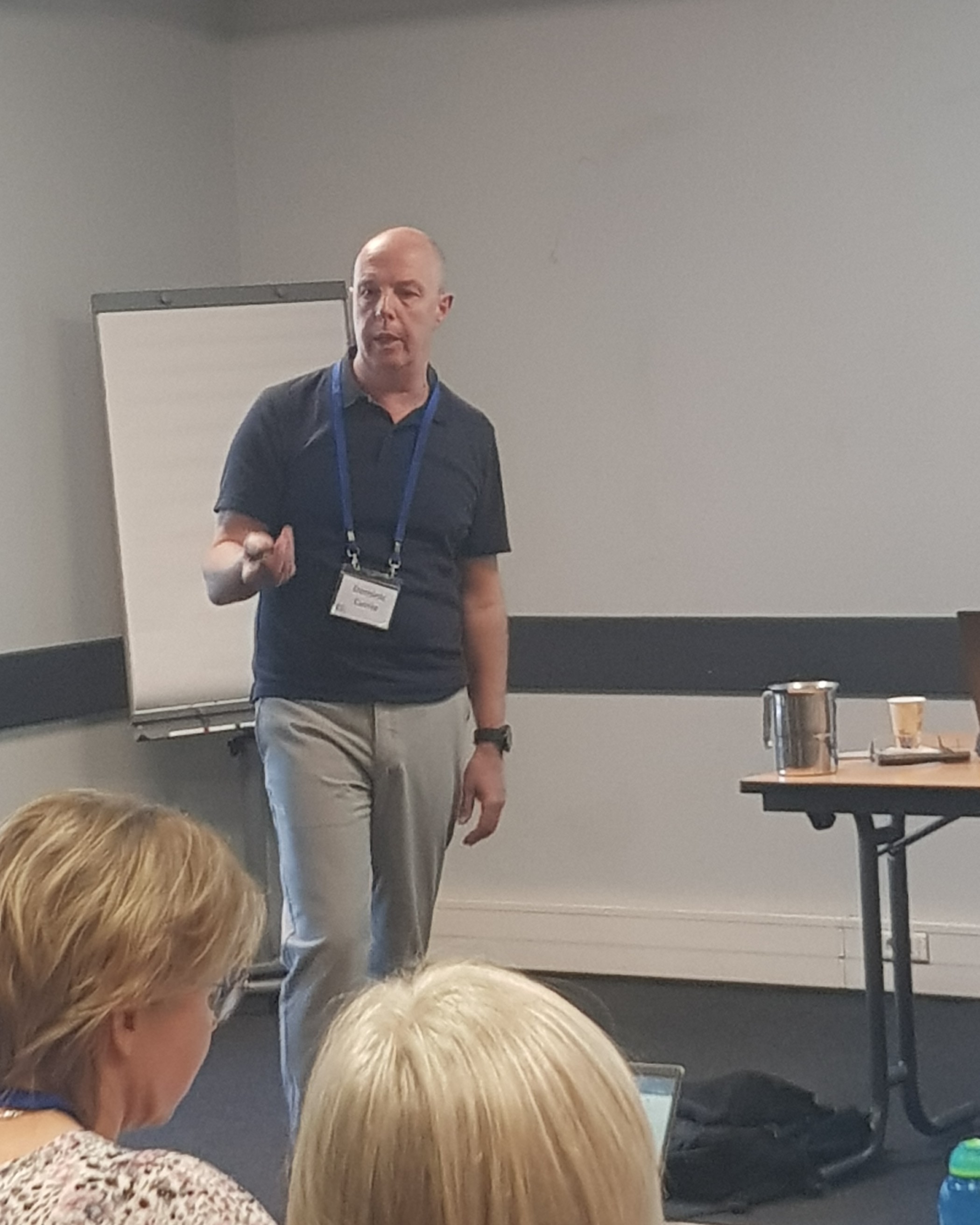
Down the hall, Dominic Currie shared his expertise on harnessing LLMs for translation. He began by explaining what LLMs are and how they work, from the early models to GPTs. Then he looked at what they can’t do – unlike humans, they lack the understanding of context, nuance recognition and experiential knowledge. Next came the nitty-gritty, with Dominic demonstrating the multi-step prompt technique he has developed to optimize terminology research and MT customization in his own workflow, which participants tried for themselves through guided exercises. In the final part of the workshop, Dominic touched on the ethical and environmental issues raised by LLMs and how translators can overcome them.
The lunch break gave participants a welcome chance to process the morning’s learnings, compare notes and catch up with colleagues. Then it was back upstairs for the afternoon workshops on voice, though in different forms.
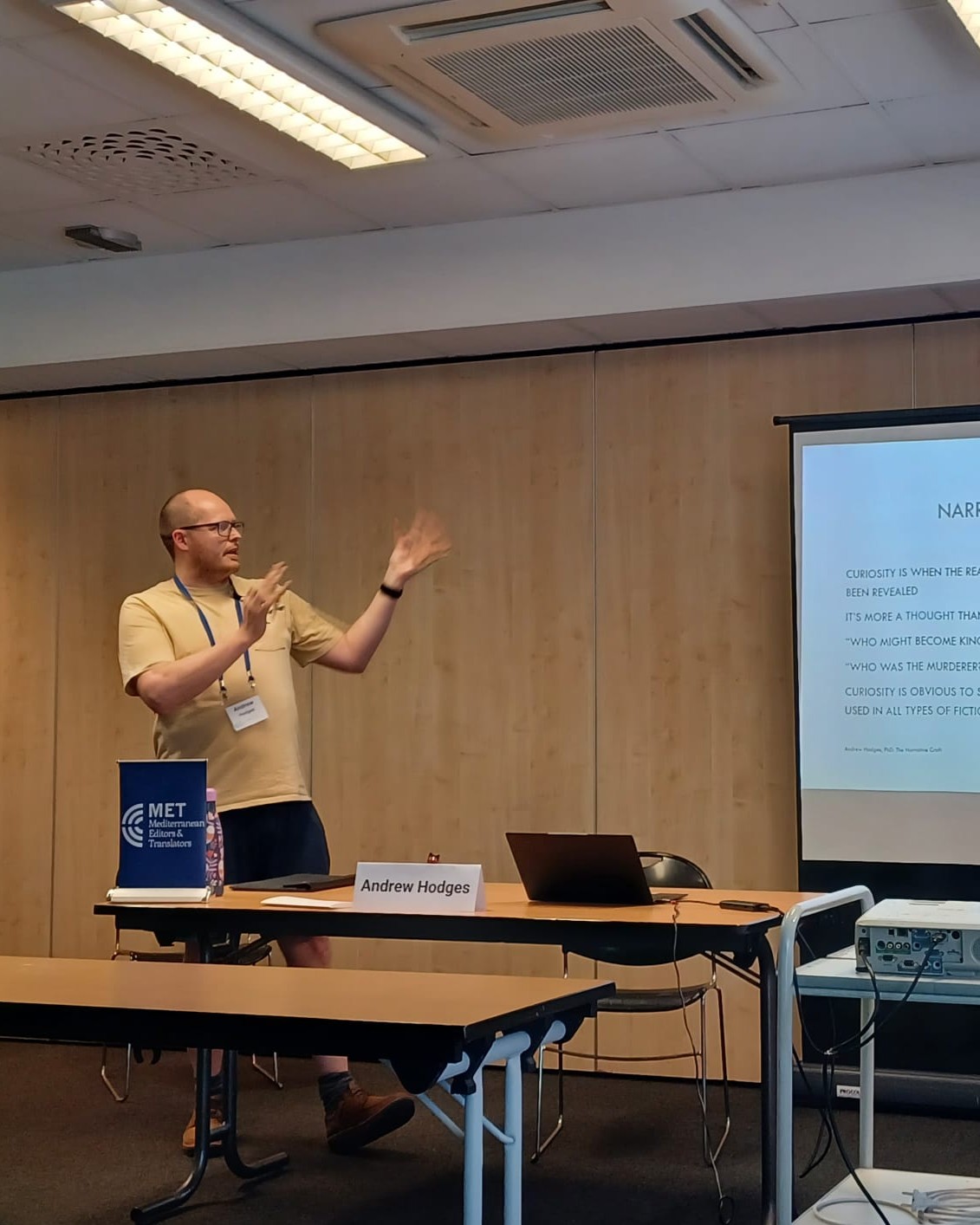
Andrew Hodges’s workshop took participants on a journey through voice on the page, looking at fiction craft techniques such as narrative and exposition, curiosity, tension, wish fulfilment and insight. Andy broke the ice with a freewriting exercise, taking everyone out of their comfort zones and into a new creative dimension. These jottings cleverly became the backbone for the rest of the tasks in this interactive session. Andy explored each of the fiction craft techniques in turn, providing explanations, examples and exercises to guide the group. Participants edited their own texts iteratively to put the strategies into practice and strengthen their voice, listening to excerpts of each other’s texts and looking at some of Andy’s own examples. The second part of the session drilled down into sentence-level detail, covering rhythm and flow, voice, style and suspense. Andy masterfully accompanied the group through his processes in the world of creative fiction before finishing up with some recommended reading to flex the developmental editing muscles some more.
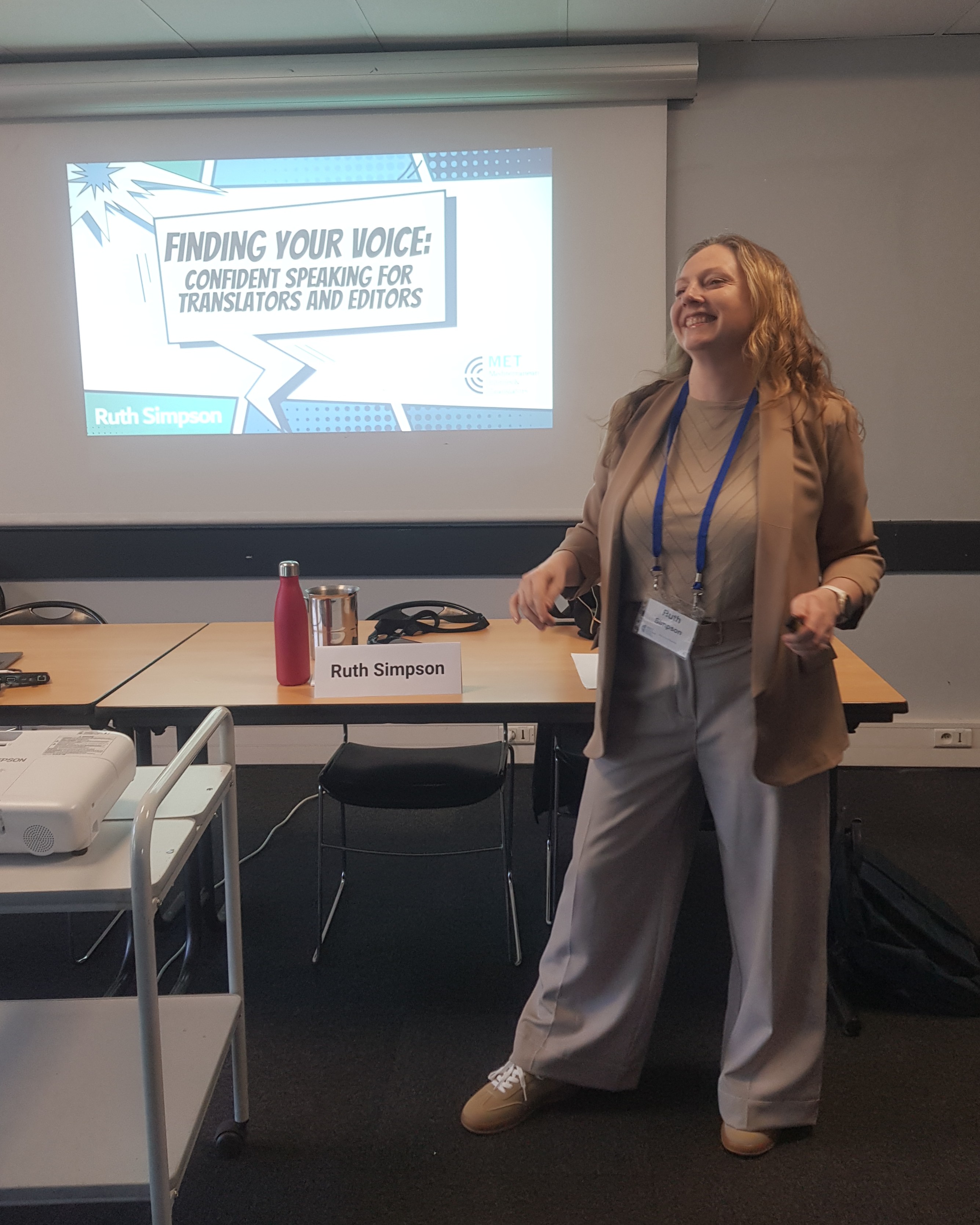
Next door, attendees were warming up in nervous anticipation for Ruth Simpson’s workshop on confident speaking for editors and translators – a skill that many language professionals claim to need but not have. Ruth started by walking the attendees through common phobias, with glossophobia (fear of speaking in public) being in the lead. Everybody was naturally encouraged to share and discuss their own fears. Next, the group brainstormed about the qualities of good speakers, which Ruth divided into three categories: grace, credibility and resonance. A guide on how to “survive” swiftly completed the topic with some much-awaited practical advice. The group appreciated Ruth’s authenticity and experience, as well as her contagious enthusiasm, which gave them the courage to try and try again. The theory was repeatedly tested through interesting and well-paced activities, culminating in a final exercise that invited participants to take on the role of a historical figure and deliver one of their major speeches.
After a jam-packed day of learning, attendees headed to a nearby restaurant to wind down and connect over traditional Lyonnaise fare.
Thank you to our four facilitators, the workshop team and all those who travelled to Lyon to make the day a success. We’re also grateful to the contributors to this write-up: Katarzyna Szymańska, Laura Bennett, Hayley Smith* and Jacqueline Lamb. Special thanks go to CPD assistant Laura Bennett for her behind-the-scenes input and to Louise Normandière for coordinating the workshop programme.
*Sign‑in required to view this MET member profile.


Follow us: